
The key is ensuring the test market is representative of the larger audience – otherwise, results may not translate accurately. For many teams, this takes the form of understanding forecast categories such as Pipeline, Best Case, and Commit, which help structure manual forecasts. Here’s a detailed breakdown of ten of the most powerful methodologies for forecasting in sales, along with practical insights and guidance regarding organizations usually use only one method for forecasting sales. how each is best utilised in a real-world setting.
- They’ll also need to have collected enough data regarding these variables over time to come up with an accurate forecast.
- Investing in state-of-the-art forecasting programs could be one of the best investments you make in your company.
- The bottom-up sales forecasting begins at the grassroots level, with individual sales teams providing localized forecasts.
- A lack of historical sales data is a common issue for startups and newly established businesses.
What are the main types of sales forecasting methods?

Still, once trained, tested and integrated into your company’s setup, these algorithms are significantly more accurate. It doesn’t take into account economic conditions, alterations to your industry, or any changes that may come on a micro level. Firms using the almanac method saw their 2019 projections wiped out due to lockdowns and new health and safety regulations. Instead, you can make educated assumptions about the relationships between different factors.
Business context
- Someone who has 10 opportunities worth $1 million per deal closed would predict a quarter worth $4 million if they were being conservative.
- At this stage, sales forecasting is often handed over to dedicated teams such as Sales Operations or Revenue Operations (RevOps).
- These are a few of the many sales forecasting methods used by small businesses, corporations, and enterprises to predict their sales.
- This approach provides a granular, data-driven forecast that takes into account the likelihood of individual deals closing.
- But it’s important to remember that this technique is only precise if your reps track when and how prospects enter their pipelines.
- This method is crucial for inventory management and ensuring businesses can meet customer needs without overstocking or understocking products.
- Time series analysis in sales forecasting uses data collected at various time intervals to track changes over time.
Demand forecasting involves predicting future customer demand using historical data and market analysis. This method is crucial for inventory management and ensuring businesses can meet customer needs without overstocking or understocking products. It’s easy to automate using sales forecasting tools, and it works well for fast-moving teams juggling lots of opportunities. Regular pipeline reviews combined with this forecasting technique can highlight gaps early and help keep your revenue goals realistic. The key here is having solid data on your sales cycle length, which can be tracked through a CRM or sales forecasting tools. It helps avoid overly optimistic forecasts and smooths out revenue projections over time, giving you a better handle on cash flow and hiring plans.

Limited Investments in Growth and Innovation
- Deals that are close to closing—say, in the negotiation or contract stage—are weighted more heavily in the forecast than those still early on, like initial outreach.
- A strong sales forecast is more than a number – it’s the foundation for resource allocation, hiring plans, marketing budgets, and revenue growth strategies.
- When done right, it transforms guesswork into clarity, turning your pipeline into a predictable revenue machine.
- The ‘one size fits all’ approach simply doesn’t apply to sales forecasting methods.
- These figures can be further incorporated into other sales forecasting models.
- Opportunity stage forecasting is a sales forecasting method that evaluates deals in the sales pipeline based on their stage within the sales cycle.
- Discover and act on private market opportunities with predictive company intelligence.
It looks at your past sales numbers—think last quarter, last year—and uses those trends to predict what’s coming next. Regardless of how often you update your model, run your updated model and compare its predictions against actual results to refine and improve its accuracy over time. Regularly repeating this process helps keep your forecasts reliable and relevant. Modern revenue leaders are moving beyond manual forecasting to AI-powered platforms that Liability Accounts deliver accurate predictions while freeing up time for strategic revenue growth initiatives. Long-term sustainability relies on a deep understanding of all the trends, impacts, and relationships between your business and the industry in which it operates. The opportunity stage forecasting model predicts that a $8,000 deal at the relationship-building stage has a 45% chance of closing.
How to Choose the Right Sales Forecasting Method
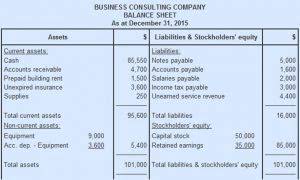
One study from balance sheet Gartner showed that 50 percent of sales leaders have little faith in their company’s ability to forecast sales accurately. In other words, if you’re not carrying out forecasting, or performing forecasts poorly, you’re already at a significant disadvantage. Accurate sales forecasting influences not only the sales organization but also the entire business as a whole.